::wipes dust off of blog::
Wow, sorry for the absence. I keep feeling like I want to write, but don't. I've been too busy working (12 days straight!), plus two classes and in my off-time, just consuming too much media to produce any of my own; a serious problem, but the product of low energy. Part of it, too, is a sort of depression. I think I may be having inklings of a midlife crisis here. Nothing full blown, but it's there.
One thing is that I'm getting to the age where I'm beginning to realize that my life is not going to be some epic thing, I'm probably not going to change the world, write the next great novel, do anything seriously earth shattering. Youth has that boundless optimism, but experience comes along and proves it wrong. I am an ordinary man, not some maverick, not likely to be a creative genius or do anything too amazing. I am likely to be one of the nameless massmen of the dustbin of history, who did nothing more noteworthy than to simply struggle to stay alive until he died, forgotten. It's kind of a disturbing notion to accept.
Plus, I'm starting to realize just how self-centered my life is. I've been stressing for more than a decade about what I'm to do with myself, both big stuff and little stuff. What to study, what career to choose, which trail to hike, which book to read, TV show to watch, etc etc. I've talked plenty about ego on here, but it's becoming distressingly clear just how caught up I am in myself. My life has become a sort of monument to my self. Here I read all these books, trying to learn things that have no actual application except to aggrandize my own self-image as a know-it-all. I live for myself, which is to live for nothing at all, yet I don't know how to get out of it. I feel I've gone too far that I've forgotten how to get back.
Partly, the problem is that my love of knowledge has become a sort of addiction to information. I remember back in the day, between 18 and 21, discovering Eastern religions, waking up to the political world (9/11 was my coming of age in that respect), learning about Peak Oil, inklings of cultural collapse, and all that stuff. It was like a punch in the face, everything seemed to open up and be illuminated. But the glow has worn off. I keep hoping that the next beautiful idea will change my life. Yet, it has largely devolved into a pointless addiction. The internet is especially bad for this. I can lose hours on Wikipedia without realizing it, following links. It is no different with books, though. And it's all a reflection of my own selfish interests.
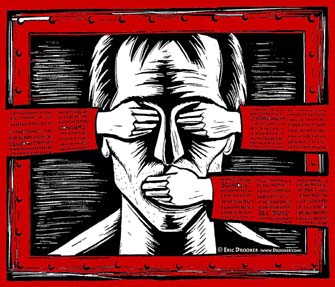
I recently watched a debate on PBS, a show called Intelligence Squared, debating this proposition: The internet is closing our minds (podcast here). Interesting debate. I fell toward the "pro" position, though with some reservations. It seems to me (and those arguing the "pro" position) that often the internet becomes sort of a hall of mirrors, a giant narcissistic image of the self. Do we not more often search out things we agree with? I never go to FOX news website, but have often gone to places such as CommonDreams, alternative news and information. People filter their own information intake in this way.
Furthermore, there are filter bubbles (a TED video, whose speaker was also in the I2 debate), thanks to the "personalization" of Google and social media. Google tracks the sort of stuff you search, builds up a sort of database or rubric, then when you search something new, guesses at the sorts of websites you want to see. A liberal and a conservative will get different results when they search "Obama," the latter getting more stuff slanted towards the birther "debate" and Obamacare. Up to 60% of first-page links on a Google search will be personalized this way. Yet it is not generally known among internet users that this is going on, because you have to put two computers side by side to see the differences.
Yahoo, Facebook and Twitter can be bad in this way too, or worse. They are watching what you're watching, and helping tailor your internet experience. But basing the future on the past, so to speak, is idiotic. It is probably more important that we don't just keep plodding down the tracks of our old ideologies, but that we are exposed to new ideas.
Of course, you can still find anything on the internet, read any viewpoint you want, and expose yourself to all kinds of new ideas. And it is a wonderful way for people to connect. Atheists used to be all alone, usually; but now, they can get online, meet whole forums full of other atheists, and not feel so isolated. People into paleo-skills can find people with like interests and tons of resources to further their skill set. It's pretty amazing, really.
But this was my reservation against being on the "pro" side; basically the internet isn't closing the American mind, certain web companies are. Filter bubbles do exist, yet they aren't absolute. This is my experience. I've learned tons from the internet, though I also admit that I tend to gloss over dissenting viewpoints, often dismissing them out of hand as closed-minded conservative shills for big business. I read some of them, and enjoy a good debate, but I don't always have the time or inclination. And like any human, I prefer to have agreement than dissent. And with all the trolls and flamers out there on the interwebs, a good serious debate can be hard to come by, and the comment threads under an article are not conducive to anything but making quick sniping comments. It's just not the right format.
In the end, the "pro" position won. It was an good debate, proven by the fact that at the end I was less sure of my position than at the beginning; but I'm not sure it deserves the status of being called "Oxford style" debate. I feel that at Oxford, the debaters would present more clearly, define the question and their terms more strictly and explicitly, and be less informal. But it would be great to see political candidates debate that way.